
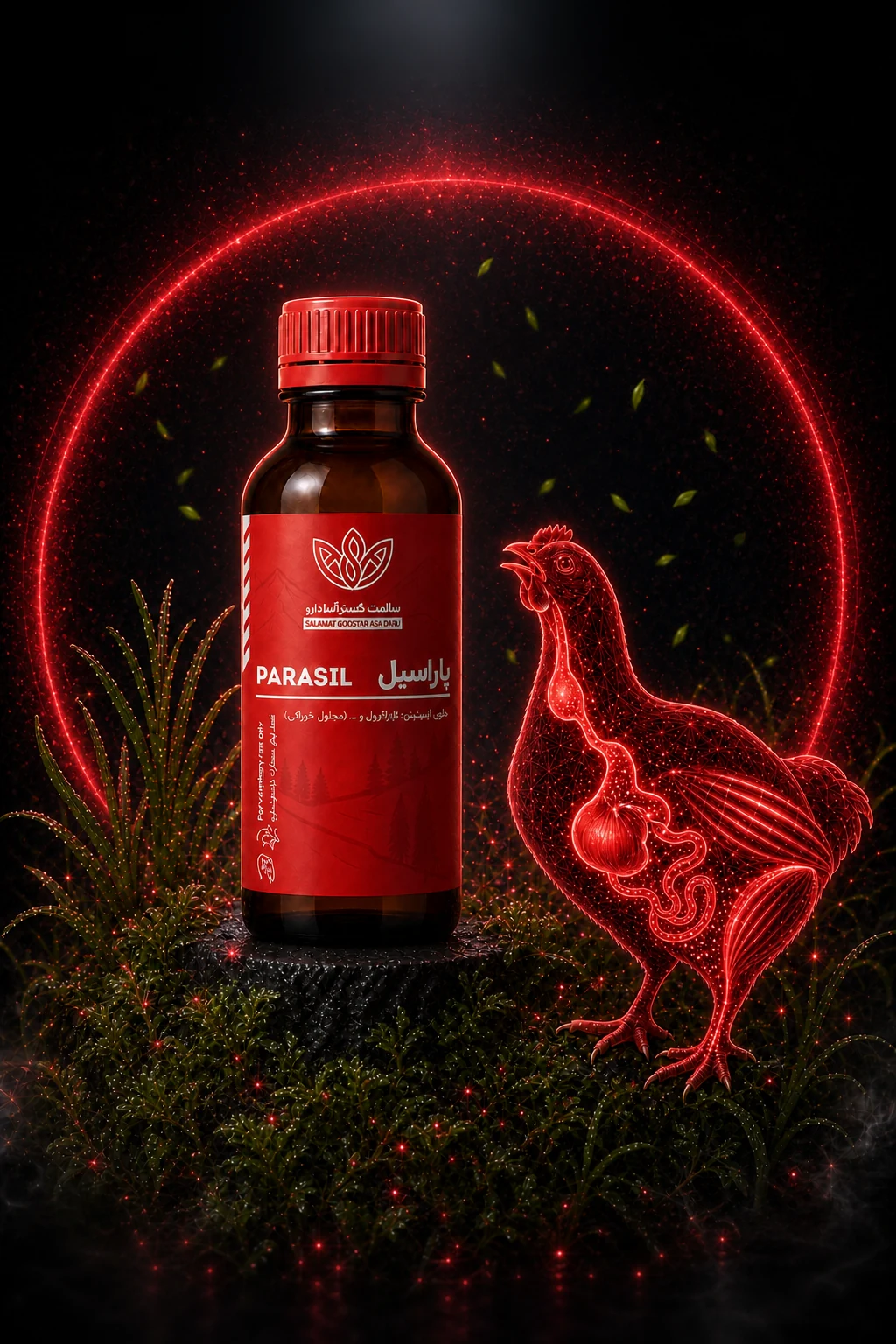
PARASIL · DIGESTIVE
Parasil
Herbal Support in the Management of Poultry Coccidiosis — a supportive phytogenic supplement based on Artemisinin, Carvacrol, for Poultry & livestock (calves, lambs, ewes).
A supportive and preventive supplement — not a substitute for treatment, vaccination or the technically responsible veterinarian's opinion.
DATASHEET
Datasheet
Technical specifications of Parasil per the product datasheet and official label. For the usage program, see the “Dosage & Use” section.
DOSAGE & USE
Parasil — use and dosage by flock problem
The figures below are a general solution mixing rate (a general rule of “250 cc per 1,000 L of water”), not a treatment protocol. The choice of product, amount and duration of use is always determined by the flock's responsible veterinarian and the product label; these products are supportive supplements and are not a substitute for treatment or vaccination.
In acute infectious cases, antibiotics per antibiogram and veterinary instruction take priority, and the herbal product plays a supportive role.
MECHANISM
Mechanism of action
Parasil is built on a artemisinin and carvacrol. In research these compounds have been studied for supporting intestinal mucosal health and for natural antimicrobial activity during enteric challenge, serving as a supplement to the gut-health management program.
BENEFITS
Benefits for the flock
Supports intestinal health during enteric challenge
Helps maintain digestive mucosal integrity
A supplement to the gut-health program, alongside veterinary guidance
Safety & usage note
Parasil is a herbal, supportive/preventive product and is not a substitute for treatment, vaccination or the opinion of the technically responsible veterinarian. Adjust the dose and duration according to the product label and expert advice, and in acute disease continue the primary treatment as directed by the veterinarian.
Full product details
Product Overview
Parasil is a specialized herbal oral solution that supports intestinal health and helps manage the challenges caused by coccidiosis in all types of poultry.
Coccidiosis can damage the intestinal mucosa, increase inflammation, impair nutrient absorption, and lead to diarrhea, wet litter, reduced feed intake, and lower flock performance. Even mild or subclinical involvement may reduce weight gain and raise the feed conversion ratio without any noticeable rise in mortality.
By drawing on plant essential oils, Parasil helps reduce oocyst shedding, slow the sporulation of Eimeria oocysts, and limit the intestinal damage caused by coccidial challenges.
By supporting the intestinal mucosa and villi, helping maintain microbial balance, and reducing inflammatory and oxidative pressure in the intestinal tissue, this product also supports the normal function of the digestive tract, nutrient absorption, and the preservation of flock performance.
Features and Benefits
- Helps manage the challenges caused by coccidiosis
- Helps reduce the shedding of Eimeria oocysts
- Helps slow the sporulation of oocysts
- Helps reduce mucosal damage in the intestine
- Supports the health of the villi and the mucosa of the digestive tract
- Helps maintain intestinal microbial balance
- Helps reduce inflammation and oxidative pressure in intestinal tissue
- Helps improve stool consistency
- Helps reduce litter moisture
- Supports better absorption of nutrients
- Helps maintain feed intake, growth, and flock performance
- Supports the feed conversion ratio during periods of digestive challenge
Mechanism of Action
Helping reduce oocyst shedding
The herbal compounds in Parasil help reduce the number of oocysts shed in the feces and limit contamination pressure in the house environment.
Helping slow sporulation
Parasil can help slow the sporulation of Eimeria oocysts and limit their conversion into the infective form in the litter.
Supporting the intestinal mucosa
The compounds in Parasil help preserve the health of the intestinal mucosa and villi and support the natural capacity of the digestive tract to absorb nutrients.
Supporting microbial balance
Parasil can be used in programs that support the balance of the intestinal microbial flora and limit the overgrowth of opportunistic agents.
Reducing inflammatory and oxidative pressure
The product's herbal compounds help reduce the inflammatory pressure and oxidative stress placed on the intestinal tissue.
Supporting digestive performance
Preserving the health of the intestinal mucosa and villi can help improve digestion, nutrient absorption, and the preservation of flock performance.
When Can Parasil Be Used?
- Periods of risk of or involvement with coccidiosis
- Increased shedding of Eimeria oocysts
- Increased coccidial contamination pressure in the litter
- Diarrhea and changes in stool consistency
- Wet litter related to digestive problems
- Reduced feed intake or feed refusal
- Reduced growth and lower flock uniformity
- Impaired nutrient absorption
- An increased feed conversion ratio related to poor intestinal health
- Damage and inflammation of the intestinal mucosa
- The recovery period after digestive challenges
The Role of Parasil in Coccidiosis Management
Beyond using the product, successful control of coccidiosis should include the following measures:
- Controlling litter moisture
- Fixing leaks and adjusting drinkers
- Correctly implementing the vaccination or medicinal control program
- Monitoring intestinal lesions
- Managing stocking density and ventilation
- Observing biosecurity
- Reviewing the diet and the quality of raw materials
How to Use and Dosage
Supportive use
250 ml per 1000 liters of drinking water, two to three days a week.
During periods of diarrhea, wet litter, or digestive problems
250 ml per 1000 liters of drinking water for 3 to 5 consecutive days.
Practical note
Each 250 ml bottle of Parasil is enough to prepare 1000 liters of drinking water in a single round of use.
Important Usage Notes
- Shake the product container before use.
- Prepare the solution with clean, high-quality water.
- The prepared solution should preferably be used on the same day.
- Water lines should be cleared of incompatible residues before use.
- Use of Parasil should be accompanied by improvements to litter, ventilation, drinkers, and diet.
- In the event of increased mortality, bloody diarrhea, a severe drop in feed intake, or extensive intestinal lesions, veterinary evaluation is essential.
- Parasil is not a substitute for veterinary diagnosis or the treatment program the flock may require.
Concurrent Use with Other Products
Together with antibiotics
Parasil can be used alongside an antibiotic prescribed by a veterinarian. This product is not a substitute for the specific treatment of a bacterial infection.
Together with other Asa Daru products
Parasil can be used concurrently with the company's other products, including Carvacil, Thymocil, and Allicil. To choose the right combination based on the type of problem, the severity of involvement, and the age of the flock, scientific consultation is recommended.
Scientific Study of Parasil
Parasil was evaluated in a trial study on broiler chickens challenged with Eimeria oocysts. The results showed that, compared with the challenged group that received no support, the use of Parasil was associated with the following:
- Reduced oocyst shedding
- Reduced severity of intestinal lesions
- Support for the feed conversion ratio
- Reduced mortality caused by the challenge
- Better preservation of intestinal structure and health
Laboratory Investigations
Laboratory investigations carried out on the herbal compounds of Parasil have shown their antioxidant capacity and their supportive effects against certain microbial agents related to the digestive tract.
Withdrawal Period
Parasil has no withdrawal period for meat and eggs.
Frequently Asked Questions
What types of poultry can Parasil be used for?
It can be used for all types of commercial and ornamental poultry.
Is Parasil an antibiotic?
No. Parasil is a herbal oral solution that supports intestinal health and helps manage coccidial challenges.
Is Parasil used for coccidiosis?
Yes. Parasil can be used as part of a coccidiosis control program to help reduce oocyst shedding, reduce sporulation, and support intestinal health.
Does Parasil reduce oocyst shedding?
Based on the action of the product's compounds and the results of the study conducted, Parasil can help reduce the shedding of Eimeria oocysts.
Does Parasil affect oocyst sporulation?
Parasil can help slow the sporulation of Eimeria oocysts and limit their conversion into the infective form.
Is Parasil suitable for wet litter?
If the wet litter is related to diarrhea or intestinal health problems, Parasil can be used alongside corrections to drinkers, diet, ventilation, and litter.
Is Parasil used for necrotic enteritis?
The specialized product related to necrotic enteritis in the Asa Daru range is Carvacil. Parasil is presented with a focus on coccidiosis and support for intestinal health.
Is Parasil used together with antibiotics?
Yes. There is no problem using Parasil concurrently with an antibiotic.
Can it be used with other Asa Daru products?
Yes. Parasil can be used together with the company's other products such as Carvacil, Thymocil, and Allicil.
Is it used at the time of the coccidiosis vaccine?
No. It should not be used within 24 hours before and 24 hours after the coccidiosis vaccine.
How much water is each bottle enough for?
At the usual dose, each 250 ml bottle is enough for 1000 liters of drinking water.
Does Parasil have a withdrawal period?
No. It has no withdrawal period for meat and eggs.
Get a Consultation
Do you need guidance in choosing the right Parasil program? The age of the flock, the severity of the symptoms, the condition of the litter, the coccidiosis control program, and the farm's history all influence the choice of the right program. To receive a program tailored to your flock's conditions, get in touch with the scientific experts at Asa Daru.
FAQ
Frequently asked questions about Parasil
Related products
All products
Is Parasil right for your flock?
An Asadaru technical specialist will provide a usage program and price quotation tailored to your flock's conditions and under the supervision of the responsible veterinarian.