
The Poultry Immune System: Function and Weakening Factors
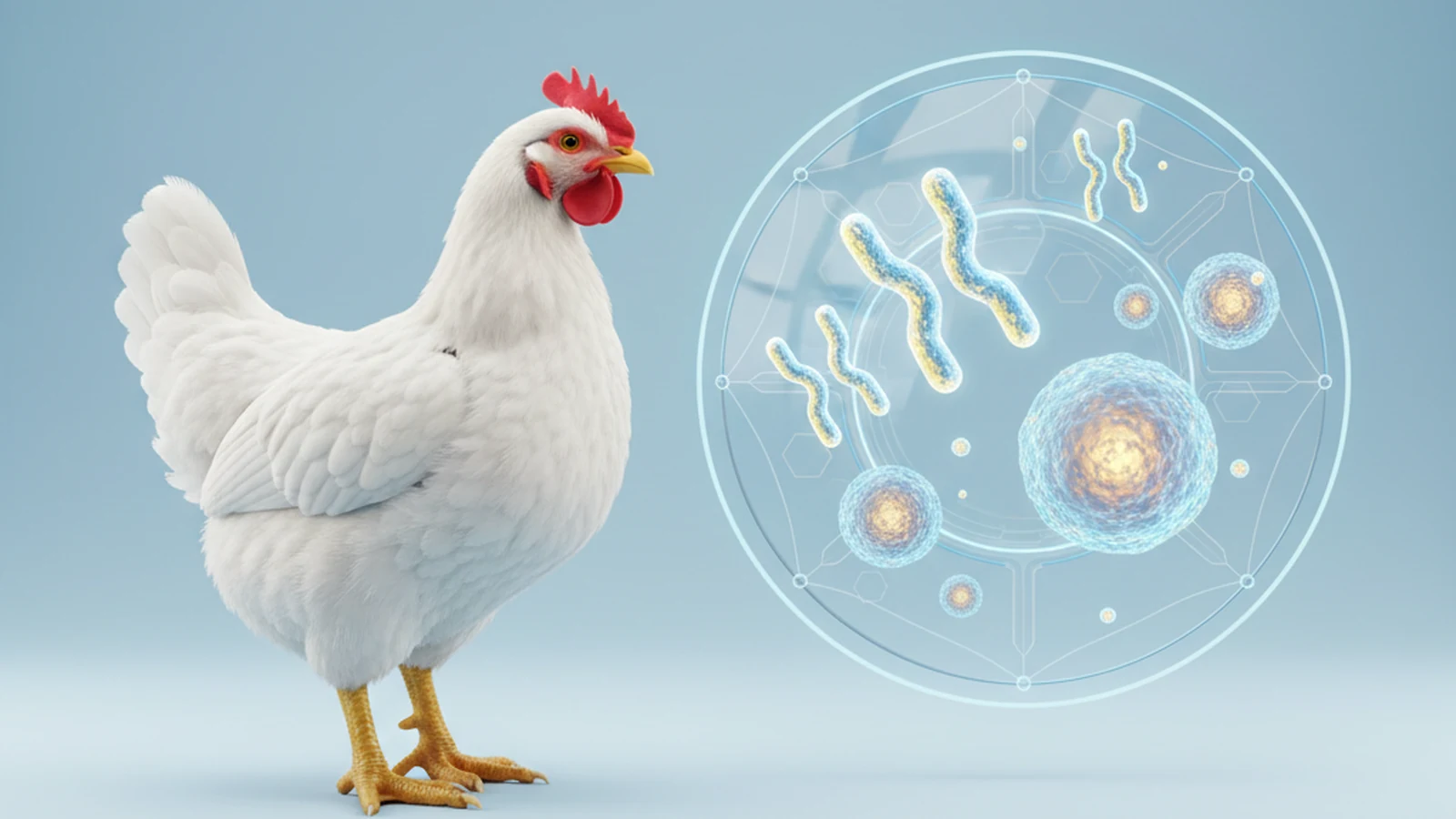
The poultry immune system is a network of physical barriers, cells, organs, and defensive molecules that identifies and controls infectious agents. Proper functioning of this system is essential for health, the response to vaccination, growth, and sustained flock performance. However, the immune response has a cost in energy and nutrients and is influenced by age, genetics, nutrition, environment, and disease.
In broiler chickens, the short rearing period and high growth rate make the timely development of innate and adaptive immunity especially important. The goal of management is not to create the greatest possible immune stimulation; rather, it is to maintain a balanced, effective response that is proportionate to the risk.
Components of the poultry immune system
Physical and chemical barriers
The skin, the respiratory and digestive mucosa, mucus, cilia, and antimicrobial compounds are the first line of defense. Damage to the mucosa caused by ammonia, heat, toxins, or disease can make it easier for pathogens to enter.
Innate immunity
Innate immunity acts quickly and includes cells such as heterophils, macrophages, and natural killer cells, as well as inflammatory signaling molecules. This response is not specific to a particular agent, but it is important for the initial control of infection and for activating adaptive immunity.
Adaptive immunity
Adaptive immunity is more specific and includes cellular and humoral responses. B lymphocytes produce antibodies, and T lymphocytes play a role in regulating the response and eliminating infected cells. By creating immune memory, vaccination aims for a faster and more effective response upon subsequent exposure.
Important immune organs
The bursa of Fabricius is important for the development of B lymphocytes, the thymus for T lymphocytes, and the spleen and mucosa-associated lymphoid tissues for coordinating the response. Immunosuppressive diseases or severe stress can impair the development and function of these organs.
Factors that weaken flock immunity
- Heat stress, cold stress, or severe temperature fluctuations
- Poor ventilation, ammonia, and dust
- High stocking density and competition for water and feed
- Deficiency or imbalance of protein, amino acids, vitamins, and minerals
- Mycotoxins and feed oxidation
- Immunosuppressive diseases such as Gumboro (IBD) or Marek's
- Concurrent infections and high pathogen pressure
- Errors in the handling, storage, or administration of the vaccine
- Inappropriate use of drugs and disruption of the microbiome
Vaccination and the immune response
Vaccination is part of a disease-control program, and its success depends on vaccine quality, the cold chain, timing, method of administration, uniformity of uptake, and maternal antibody status. A vaccine cannot compensate for a severe weakness in biosecurity or for unsuitable environmental conditions.
The interpretation of an antibody titer should be done together with the mean titer, the coefficient of variation, age, vaccine type, and the sampling time. A high titer alone does not guarantee complete protection against all strains, and the cellular response and mucosal immunity are also important.
How can we support immune function?
- Rigorous implementation of biosecurity and reduction of infection pressure
- Providing a balanced diet and quality raw materials
- Managing temperature, humidity, ventilation, and stocking density
- Controlling mycotoxins and oxidative stress
- Uniform implementation of vaccination and serological monitoring
- Maintaining gut health and a balanced microbiome
- Reducing simultaneous and unnecessary management procedures on sensitive days
The role of herbal and antioxidant compounds
Some herbal compounds have been studied for their antioxidant, anti-inflammatory, or immune-modulating properties. The use of these approaches should be based on standardization, an appropriate dose, and evidence, and they should not be presented with claims of “unlimited immune enhancement.” The goal is to support a balanced response alongside correct management.
Frequently asked questions
Is the antibody titer the only indicator of immunity?
No. The humoral titer is one of the indicators, but cellular immunity, mucosal immunity, and the clinical status of the flock are also important.
Is more vaccination always better?
No. The program should be designed based on the regional risk, the type of flock, and the veterinarian's instructions. Inappropriate vaccination can cause stress and reactions.
Why does a high CV matter?
A high CV indicates heterogeneity of the response among birds and can result from unequal vaccine uptake, differing maternal antibodies, or management conditions.
Does heat stress reduce immunity?
Yes. Exposure to heat can affect immune responses, antioxidant defense, and gut health.
Is an immune-boosting product a substitute for a vaccine?
No. Supportive products are not a substitute for vaccination, biosecurity, or specific treatment.
Conclusion
Strong immunity is not the result of a single product; it is the outcome of the interaction of genetics, nutrition, vaccination, gut health, and environment. Instead of over-stimulation, management should focus on reducing disease pressure and supporting a balanced response.
Suggested internal links
- What is the HI titer and how is it interpreted?
- Heat stress in poultry
- Oxidative stress in poultry
- Gut health in broiler chickens
- Thymocil product page
Suggested references
1. Yang W, et al. The immune system of chicken and its response to H9N2 influenza virus. 2023.
2. Song B, et al. Effects of age on immune function in broiler chickens. 2021.
3. Hofmann T, et al. Impact of housing environment on the immune system in chickens. 2020.
4. WOAH. Principles of Veterinary Vaccine Production.
Technical publishing checklist for the first package
- Each article should have only one H1, and subheadings should be implemented in order as H2 and H3.
- The Meta Title and Meta Description of each page should be unique.
- URLs should remain short, readable, and stable.
- The file name and image Alt text should be descriptive, and unnatural repetition of the keyword should be avoided.
- The author's name or authoring unit, the scientific reviewer, and the date of the last review should be displayed.
- Article structured data should be implemented for articles and checked with the Rich Results Test.
- Internal links should be inserted with descriptive, natural text.
- The product CTA should be placed after the educational section, and the article should not turn into an advertising brochure.
- Before publication, claims related to products should be reconciled with the catalog and the approved scientific file.
Note on images
For each article, a dedicated, non-repetitive featured image is required. In this version, the image caption, Alt Text, and artistic direction have been prepared. The final images should be designed without showing disturbing lesions, without small text inside the image, and with sufficient white space for use in the desktop and mobile versions.
Phytogenics are not a substitute for good flock management; they are a complementary tool for it. The best results come when they are used alongside biosecurity, balanced nutrition and a vaccination program.
The global picture at a glance
The European Union has banned growth-promoting antibiotics since 2006, and the global market for phytogenic additives is on a steady growth path — with growing application across both poultry and livestock.
$1.05 → $1.48 billion
Global phytogenics market, 2024–2030
Grand View Research / MarketsandMarkets
Since 2006
EU ban on growth-promoting antibiotics
EU Regulation 1831/2003
Note: This piece is sample general educational content for information only; it is not a substitute for the advice of the flock’s supervising veterinarian. Asadaru supplements are supportive and preventive and are not a substitute for treatment or vaccination. The final article texts are provided and reviewed by the client.