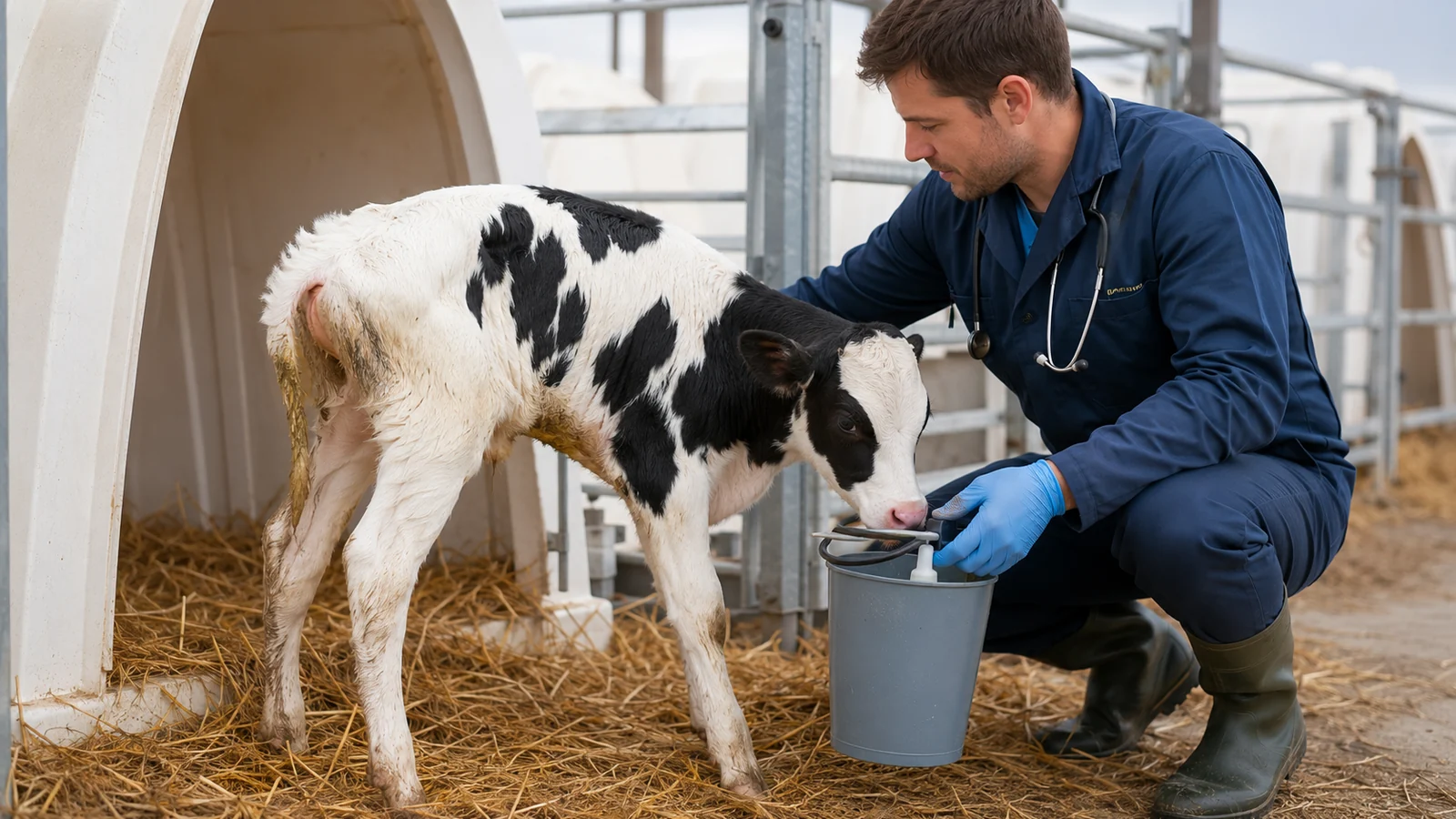
Dehydration in Calves: Warning Signs and First Aid
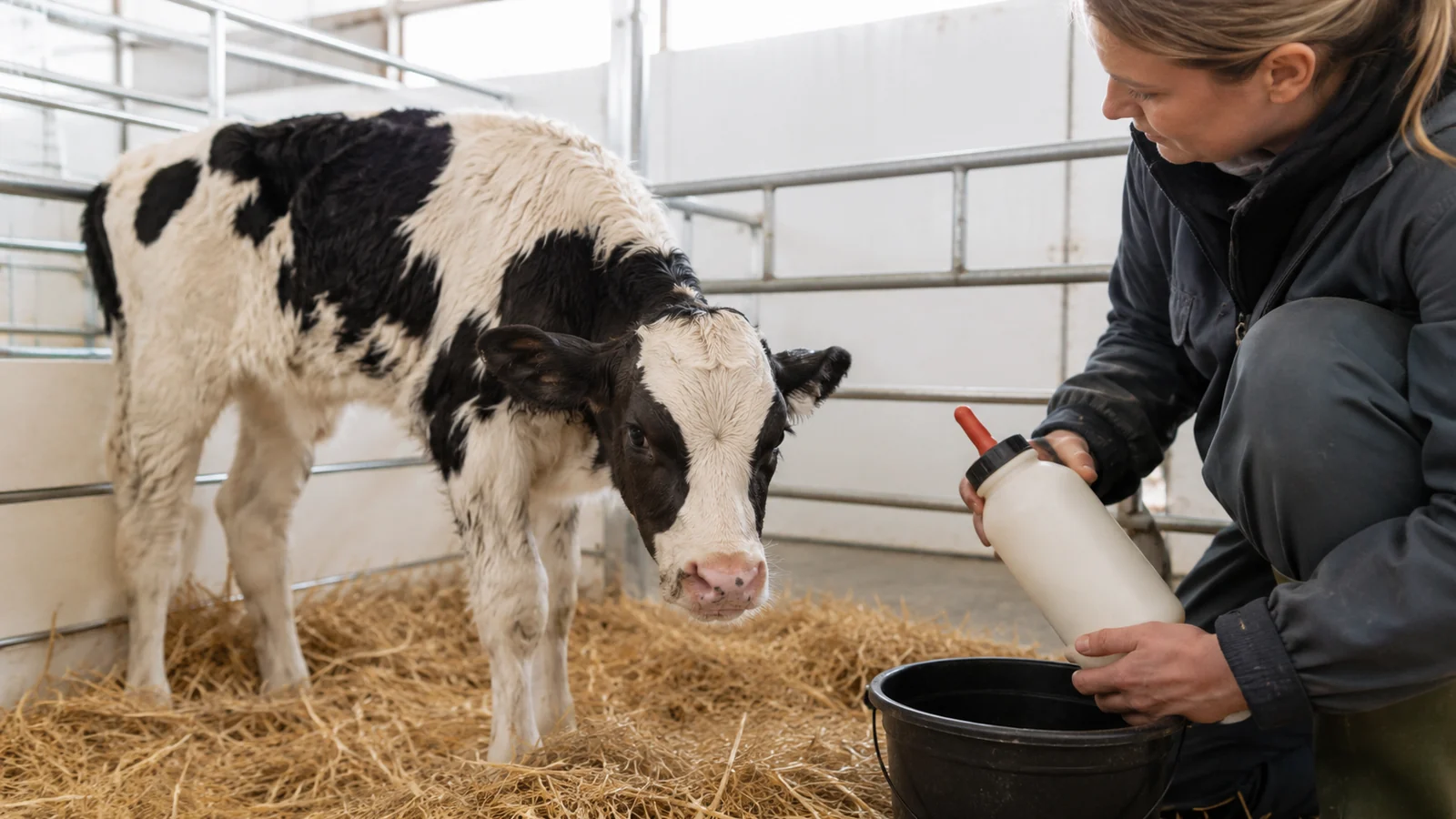
Dehydration occurs when the amount of water and electrolytes lost exceeds what the calf takes in. Diarrhea is one of the most common causes of this condition, but reduced milk intake, fever, environmental heat, and inadequate access to water can also contribute to it.
Severe dehydration may be accompanied by electrolyte imbalance, acidosis, weakness, and a decreased level of consciousness; therefore, a rapid assessment of the calf's condition is very important.
Signs of dehydration in calves
- Sunken eyes
- Dry mouth and gums
- Reduced skin elasticity
- Decreased milk intake
- Weak suckling reflex
- Lethargy and reduced movement
- Cold ears and extremities
- Inability to stand in severe cases
The severity of dehydration should not be determined from a single sign. The condition of the eyes, moisture of the mouth, ability to stand, suckling reflex, and the time a skin fold takes to return should all be evaluated together.
The most important causes of dehydration
Diarrhea
Continuous passage of watery feces causes the loss of water, sodium, potassium, and other electrolytes. The more severe or prolonged the diarrhea, the greater the likelihood of dehydration and acidosis.
Reduced milk and water intake
A sick calf may not receive enough fluids due to weakness, fever, pain, or a reduced suckling reflex. This condition can worsen dehydration even without severe diarrhea.
Environmental heat
In hot weather, a calf's need for water increases. Poor ventilation, direct sunlight, and limited access to clean water increase the risk of dehydration.
General illnesses
Fever, respiratory infections, and other diseases can reduce fluid intake and disrupt the body's water balance.
First measures for a dehydrated calf
- Investigate the likely cause of the dehydration.
- Assess the ability to stand and the suckling reflex.
- Keep the calf in a dry environment at a suitable temperature.
- Administer an oral electrolyte solution as directed by the veterinarian.
- Do not withhold milk for a long period without veterinary advice.
- Monitor the condition of the eyes, the feces, and the level of consciousness.
- In severe cases, contact the veterinarian immediately.
Oral electrolyte solutions are most suitable for calves that are still able to stand and suckle. A recumbent calf or one lacking a suckling reflex may require intravenous fluid therapy.
Should milk be withheld?
In most cases, complete and prolonged withholding of milk is not recommended, because the calf needs nutrients to maintain energy and fight the illness.
Milk and electrolyte solution serve different purposes; milk provides energy and nutrients, while the electrolyte solution is used to replace lost water and minerals. The timing and manner of their use should be adjusted according to the animal's condition and the veterinarian's advice.
The link between dehydration and calf diarrhea
In a calf with diarrhea, monitoring the appearance of the feces alone is not enough. Even if the diarrhea temporarily decreases, water deficiency, electrolyte imbalance, and general weakness may still continue.
Diacil can be used as directed and under veterinary advice as part of a supportive program for managing calf diarrhea; however, it is not a substitute for an electrolyte solution, fluid therapy, or specific treatment of the disease-causing agent.
When is it an emergency?
If the following signs are observed, the calf should be examined immediately:
- Inability to stand
- Loss of the suckling reflex
- Severely sunken eyes
- Cooling of the body
- Decreased level of consciousness
- Abnormal breathing
- Blood in the feces
- Continued dehydration despite the use of an oral solution
Frequently asked questions
Can dehydration be diagnosed from the skin?
The time a skin fold takes to return can help with assessment, but it should not be the sole diagnostic criterion.
Is plain water enough for a dehydrated calf?
Plain water does not provide the needed electrolytes and alkalizing substances. The appropriate solution should be chosen with veterinary advice.
Which calf needs an intravenous drip?
A recumbent, very weak calf, one lacking a suckling reflex, or one with a decreased level of consciousness may require intravenous fluid therapy.
Is dehydration caused only by diarrhea?
No. Fever, heat, reduced milk intake, inadequate access to water, and general illnesses can also cause dehydration.
Conclusion
Dehydration is one of the most important consequences of illness in calves and can cause weakness, acidosis, and recumbency within a short time. Early diagnosis, adequate fluid replacement, and identification of the underlying cause are among the most important measures to prevent the condition from worsening.
Related topics
- Calf diarrhea; causes, signs, and control methods
- Calf gut health
- The role of colostrum in calf health
- Heat stress in cattle
- Diacil product page
- Scientific consultation form
References
- Smith GW. Treatment of Calf Diarrhea: Oral Fluid Therapy.
- Berchtold J. Treatment of Calf Diarrhea: Intravenous Fluid Therapy.
- Trefz FM, et al. Metabolic Acidosis in Neonatal Calf Diarrhea.
- Smith GW. Fluid Therapy in Calves.
Note: This content is educational and is not a substitute for examination, diagnosis, and prescription by a veterinarian. Asadaru products are part of a supportive livestock management program and are not a substitute for fluid therapy or specific treatment.
Phytogenics are not a substitute for good flock management; they are a complementary tool for it. The best results come when they are used alongside biosecurity, balanced nutrition and a vaccination program.
The global picture at a glance
The European Union has banned growth-promoting antibiotics since 2006, and the global market for phytogenic additives is on a steady growth path — with growing application across both poultry and livestock.
$1.05 → $1.48 billion
Global phytogenics market, 2024–2030
Grand View Research / MarketsandMarkets
Since 2006
EU ban on growth-promoting antibiotics
EU Regulation 1831/2003
Note: This piece is sample general educational content for information only; it is not a substitute for the advice of the flock’s supervising veterinarian. Asadaru supplements are supportive and preventive and are not a substitute for treatment or vaccination. The final article texts are provided and reviewed by the client.