Gut Health in Broiler Chickens: Importance and Solutions
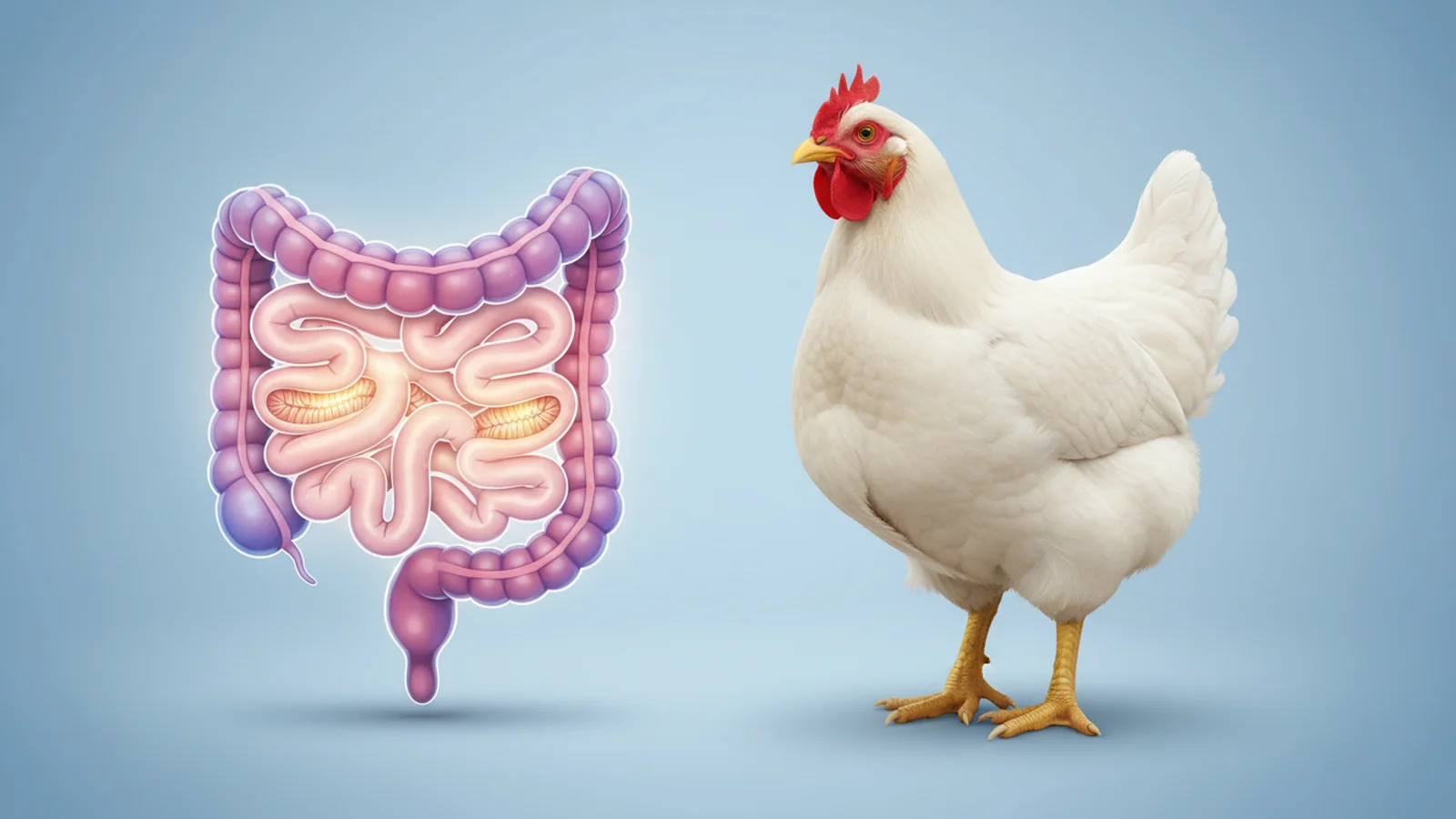
Gut health is a concept that goes beyond the mere absence of diarrhea or visible lesions. A healthy gut must be able to digest and absorb nutrients well, maintain an effective mucosal barrier against pathogens, preserve an appropriate microbial balance, and stay in harmony with the mucosal immune system. Disruption in any of these components can affect the flock's growth, feed conversion ratio, uniformity, and resilience.
In fast-growing lines, high feed intake and metabolic demand place considerable pressure on the digestive tract. Gut health is therefore the result of a complex interaction among the diet, the microbiome, the mucosa, the immune system, litter management, and pathogens.
Main Components of Gut Health
1. Mucosal structure and integrity
Intestinal villi increase the absorptive surface, and epithelial cells with intercellular (tight) junctions form the physical barrier. Inflammation or mucosal damage can increase intestinal permeability and impair absorption.
2. A balanced microbiome
The gut microbial population plays a role in digesting certain compounds, competing with opportunistic agents, and regulating the immune response. Microbial balance is not fixed; it changes with age, diet, environment, medications, and disease.
3. Effective digestion and absorption
Incomplete digestion, the presence of undigested nutrients in the distal parts of the gut, and altered passage rate can promote the growth of undesirable microorganisms.
4. Mucosal immunity
The gut is one of the largest surfaces of the body in contact with the environment. The immune response must be able to control pathogens without producing chronic and costly inflammation.
Possible Signs of Impaired Gut Health
- Reduced or fluctuating feed intake
- Decreased weight gain and increased weight variation
- Increased feed conversion ratio
- Presence of undigested feed or changes in fecal consistency
- Wet litter and increased barn ammonia
- Inflammation, abnormal thinning or thickening of the gut wall
- Increased susceptibility to coccidiosis and necrotic enteritis
The Most Important Damaging Factors
- Coccidiosis and other agents that damage the mucosa
- Overgrowth of Clostridium perfringens and necrotic enteritis
- Mycotoxins, poor raw-material quality, or fat oxidation
- Sudden dietary changes, nutrient imbalance, and undigested protein
- Heat stress, high stocking density, and poor water quality
- Disproportionate use of antimicrobial compounds and alteration of the microbiome
How Do We Assess Gut Health?
No single indicator is sufficient to fully assess gut health. Combining performance data, litter condition, fecal appearance, necropsy, lesion scoring, feed and water evaluation, and, when needed, microbial or histological testing creates a more accurate picture.
Recording trends from one cycle to the next is very important. Comparing feed conversion ratio, weight, mortality, water intake, and litter quality can reveal subclinical problems earlier.
Practical Management Solutions
- Using high-quality raw materials and controlling contamination and mycotoxins
- Adjusting the diet based on age, digestive capacity, and raw-material quality
- Monitoring water quality and cleaning water lines
- Controlling coccidiosis and monitoring intestinal lesions
- Keeping litter dry and providing adequate ventilation
- Reducing heat and management stress
- Targeted use of probiotics, prebiotics, organic acids, or phytobiotics based on evidence and flock conditions
The Role of Herbal Products
Phytobiotics and herbal compounds have attracted attention because of their diverse effects on the digestive environment, the inflammatory response, and the microbiome; however, the outcome depends on the type of active substance, standardization, dose, formulation form, and rearing conditions. An herbal product should be part of a comprehensive program, not a replacement for correcting the diet, water, litter, or disease control.
Frequently Asked Questions
Does normal feces mean complete gut health?
No. Subclinical disorders may appear without obvious diarrhea, through reduced absorption and an increased feed conversion ratio.
Does a good microbiome mean completely eliminating undesirable bacteria?
No. The goal is to maintain balance and prevent the dominance of opportunistic agents, not to sterilize the gut.
Is wet litter always caused by intestinal disease?
No. Drinker leakage, dietary salt, poor ventilation, and kidney diseases can also play a role.
When is scheduled necropsy useful?
Periodic monitoring at key ages and when performance declines can reveal digestive problems before mortality rises.
Does a single additive on its own guarantee gut health?
No. Gut health is the result of a combination of nutrition, management, biosecurity, and disease control.
Conclusion
Gut health is the foundation for the effective use of feed and the economic performance of the flock. A successful program should start with providing high-quality feed and water, control pathogens and stress, and make targeted use of standard supportive solutions.
Suggested Internal Links
- Coccidiosis in poultry
- Necrotic enteritis in poultry
- Wet litter in poultry houses
- Factors affecting the feed conversion ratio
- Parasil product page
Suggested References
1. Ducatelle R, et al. Poultry gut health and beyond. 2023.
2. Bindari YR, et al. Factors affecting the chicken gastrointestinal microbial composition and gut health. 2021.
3. Singh AK, et al. Effects of dietary fiber on nutrient utilization and gut health in poultry. 2021.
Phytogenics are not a substitute for good flock management; they are a complementary tool for it. The best results come when they are used alongside biosecurity, balanced nutrition and a vaccination program.
The global picture at a glance
The European Union has banned growth-promoting antibiotics since 2006, and the global market for phytogenic additives is on a steady growth path — with growing application across both poultry and livestock.
$1.05 → $1.48 billion
Global phytogenics market, 2024–2030
Grand View Research / MarketsandMarkets
Since 2006
EU ban on growth-promoting antibiotics
EU Regulation 1831/2003
Note: This piece is sample general educational content for information only; it is not a substitute for the advice of the flock’s supervising veterinarian. Asadaru supplements are supportive and preventive and are not a substitute for treatment or vaccination. The final article texts are provided and reviewed by the client.