Drinking Water Quality in Poultry Farming
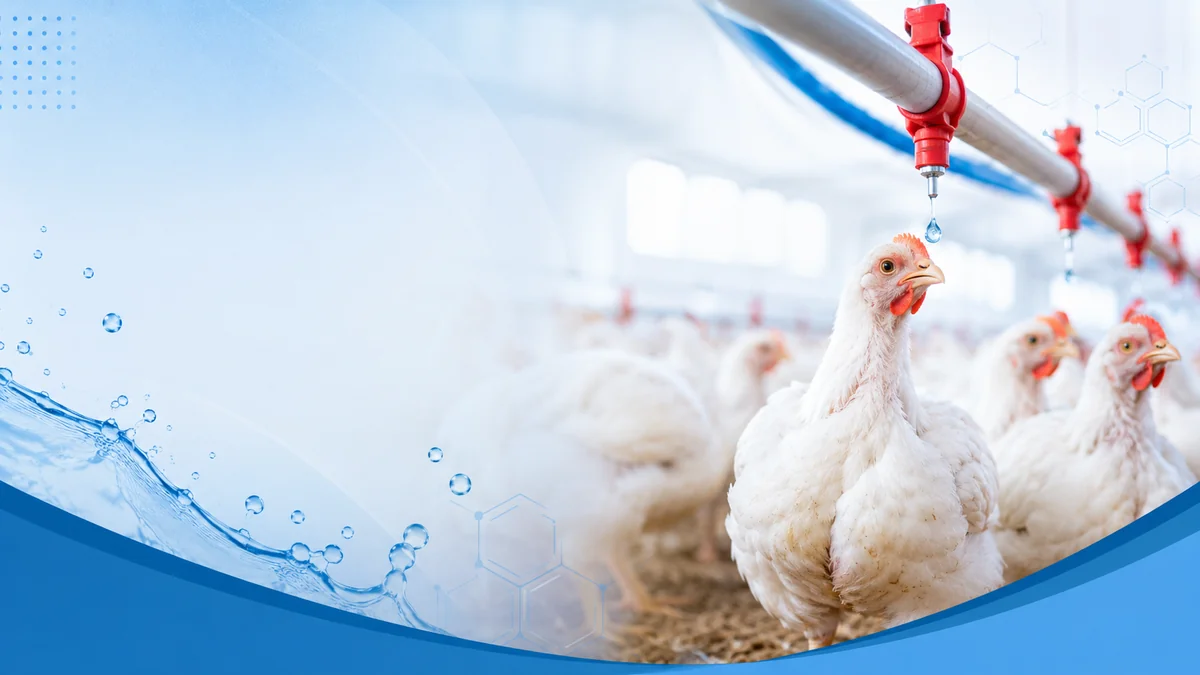
Water is the most heavily consumed nutrient in the flock, and even the slightest disruption in its quality or availability can immediately affect feed intake, body temperature, gut health, vaccination, and overall flock performance. Despite this importance, water quality receives less attention than feed on many farms.
Water quality is not limited to visual clarity alone. pH, hardness, microbial load, the presence of interfering minerals, contamination of the water lines, and even water temperature during the hot hours of the day can affect water consumption and the effectiveness of medication or vaccination programs.
Why is water important?
The bird depends on water for temperature regulation, digestion, nutrient transport, and the excretion of waste products.
Water intake usually changes before feed intake drops; it is therefore considered a sensitive indicator for monitoring the flock.
Common water quality problems
- Microbial contamination of the source or the water lines
- High hardness and scale deposits in the pipes
- Improper pH for certain compounds or medications
- High temperature during the warm season
- Biofilm in the water lines
Management measures
- Regular monitoring of the source and laboratory sampling
- Proper flushing and disinfection of the water lines
- Checking flow rate and pressure at all line ends
- Controlling water temperature during the warm season
- Coordinating water quality with the medication and vaccination program
FAQ
Is clear water necessarily safe water? No. Many microbial or chemical problems cannot be seen with the naked eye.
Does biofilm matter? Yes, it can serve as a microbial reservoir and a cause of declining water quality.
Does water quality affect medications and vaccines? Yes, in some cases it is highly influential.
Call to action
If you need to review your farm's water quality, its effect on flock performance, or its coordination with medication and vaccination programs, make use of Asa Daru's scientific consulting service.
Suggested internal links
- Heat stress in poultry
- Gut health in broilers
- Scientific consulting form
- Product usage program
Phytogenics are not a substitute for good flock management; they are a complementary tool for it. The best results come when they are used alongside biosecurity, balanced nutrition and a vaccination program.
The global picture at a glance
The European Union has banned growth-promoting antibiotics since 2006, and the global market for phytogenic additives is on a steady growth path — with growing application across both poultry and livestock.
$1.05 → $1.48 billion
Global phytogenics market, 2024–2030
Grand View Research / MarketsandMarkets
Since 2006
EU ban on growth-promoting antibiotics
EU Regulation 1831/2003
Note: This piece is sample general educational content for information only; it is not a substitute for the advice of the flock’s supervising veterinarian. Asadaru supplements are supportive and preventive and are not a substitute for treatment or vaccination. The final article texts are provided and reviewed by the client.