Fatty Liver in Poultry
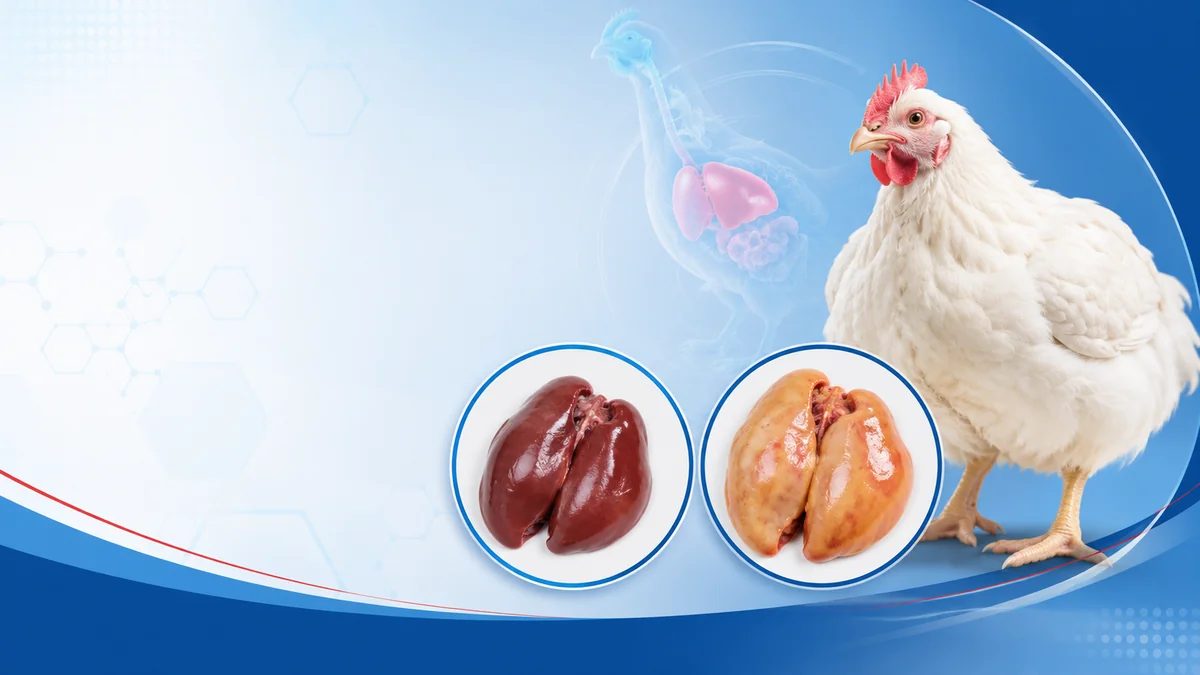
The liver is one of the key organs involved in nutrient metabolism, detoxification, fat synthesis, and the storage of certain vitamins. When fat accumulation in the liver cells becomes excessive, the liver's normal function is impaired, and the bird may face reduced performance, greater sensitivity to stress, and the onset of metabolic disorders.
Liver disorders in poultry can be influenced by numerous factors such as high dietary energy, mycotoxins, oxidative stress, diseases, and the use of certain pharmaceutical or management-related compounds. Fatty liver does not always appear in an obvious, clinical form and may be accompanied by a gradual decline in performance.
Possible signs
- Reduced growth or production efficiency
- Lethargy and greater sensitivity to stress
- Paleness or friability of liver tissue at necropsy
- Co-occurrence with other metabolic problems
Risk factors
- High-energy diets and metabolic imbalance
- Mycotoxins
- Fat oxidation and oxidative stress
- Infectious or inflammatory disorders
Supportive measures
- Quality control of raw materials and mycotoxins
- Better management of fats and feed oxidation
- Antioxidant support and reduction of inflammation
- Reviewing the feeding program and stocking density
FAQ
Is every pale liver a fatty liver? No, it must be interpreted together with the history and other findings.
Do mycotoxins play a role in this problem? Yes, they are one of the important causes of liver damage.
Is nutrition the only cause? No, environmental factors and diseases are also influential.
Call to action
To further investigate metabolic disorders and receive scientific consultation about the liver health of your flock, use the contact and consultation section of Asa Daru.
Suggested internal links
- Oxidative stress in poultry
- Drinking water quality
- Scientific consultation
- Poultry liver health
Phytogenics are not a substitute for good flock management; they are a complementary tool for it. The best results come when they are used alongside biosecurity, balanced nutrition and a vaccination program.
The global picture at a glance
The European Union has banned growth-promoting antibiotics since 2006, and the global market for phytogenic additives is on a steady growth path — with growing application across both poultry and livestock.
$1.05 → $1.48 billion
Global phytogenics market, 2024–2030
Grand View Research / MarketsandMarkets
Since 2006
EU ban on growth-promoting antibiotics
EU Regulation 1831/2003
Note: This piece is sample general educational content for information only; it is not a substitute for the advice of the flock’s supervising veterinarian. Asadaru supplements are supportive and preventive and are not a substitute for treatment or vaccination. The final article texts are provided and reviewed by the client.