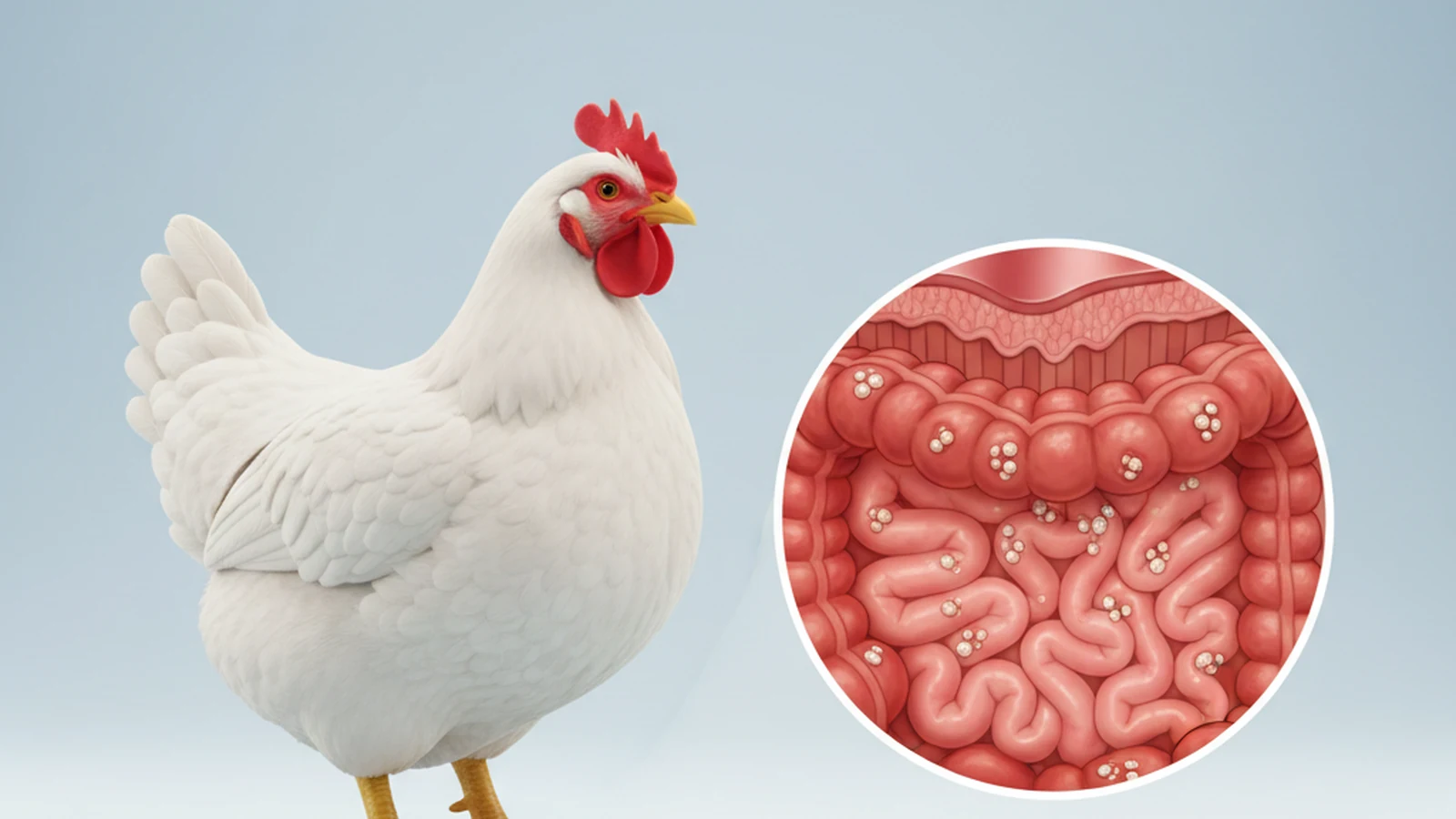
Infectious Bronchitis in Poultry: Symptoms, Diagnosis, and Prevention Methods
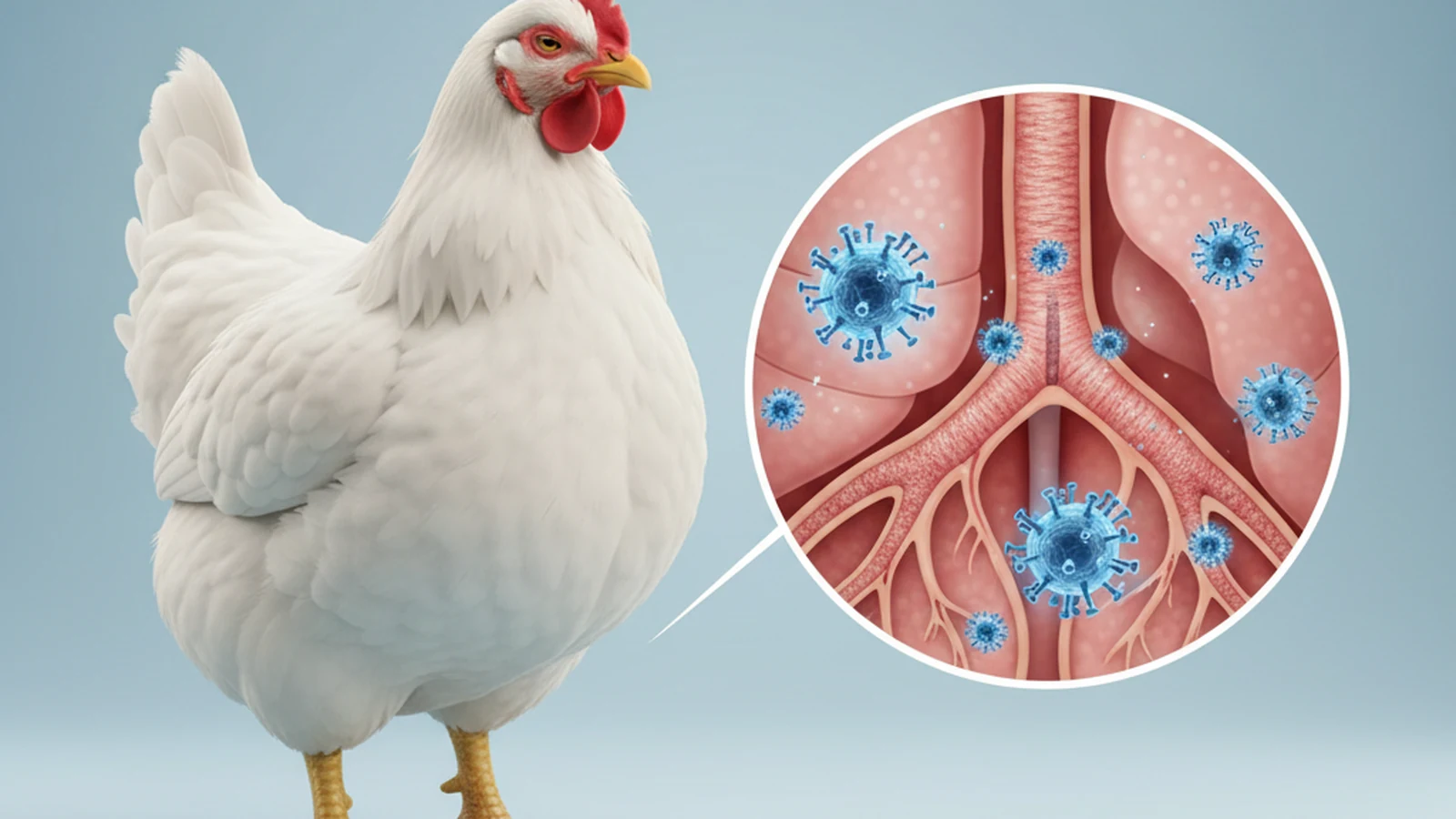
Infectious bronchitis in poultry is a viral disease that affects the respiratory tract, and sometimes the kidneys, of many types of poultry and other birds.
The bronchitis virus is classified among the coronaviruses; it is an enveloped, single-stranded RNA virus that bears crown-like projections on the surface of its envelope. Transmission of the virus within the flock occurs rapidly and causes respiratory distress in the birds.
If the bird is affected by this virus alone, mortality will be low while morbidity will be high; however, some strains of this virus have a tropism for kidney tissue and cause bird deaths due to renal failure. Furthermore, the co-occurrence of this infection with other pathogenic agents increases the resulting mortality. Vaccination with the specific strain and strict observance of biosecurity measures can help prevent the establishment of infection.
Symptoms of the Disease
- Conjunctivitis
- Swelling of the sinuses
- Nasal discharge
- Increased respiratory secretions
- Coughing and respiratory distress
- Gasping by the bird
- Chalky droppings
- Sudden drop in egg production
- Deformation and reduced quality of the eggshell
- Mortality
Necropsy Findings
- Congestion and hemorrhage of the trachea
- Caseous pus at the tracheal bifurcation
- Mottling of the kidney
- Gout
- Cystic changes and atrophy of the oviduct
- Pseudo-laying and a penguin-like stance
Routes of Transmission
- Horizontal and rapid transmission via the air
- Transmission via fomites (contaminated tools and equipment)
- Transmission via people
Pathogenesis
When the animal becomes infected, viral replication occurs in the bird's respiratory and digestive systems. After the primary viremia, the virus is carried to other organs (the gonads and the kidney). From the time of infection with the virus until the appearance of symptoms, it takes between 24 and 48 hours, after which the infected bird sheds the virus through its respiratory secretions.
If other infections are not superimposed on this disease, recovery begins one week after the onset of illness; however, shedding of the virus may continue for 15 to 20 weeks.
Diagnosis
- History
- Clinical signs
- Necropsy
- Laboratory diagnosis (RT-PCR, Real-time RT-PCR, ELISA, HI, VN)
Prevention and Control
- Observance of biosecurity measures
- Proper flock management
- Vaccination
- Strengthening the immune system
Thymosil is a multipurpose oral solution and a blend of several natural plant essential oils that, with a high percentage of active plant compounds, prevents the accumulation of pathogenic agents, stimulates and strengthens the immune system, and disrupts the growth and proliferation of bacteria. Thymosil can be used dissolved in the drinking water of poultry rearing houses, and the benefits of its use include increasing the strength of the cellular and humoral immune systems, improving titer response and reducing the side effects of vaccination, stimulating and strengthening the mucociliary system and clearing the respiratory passages, reducing vaccination and medication costs, improving respiratory status when symptoms appear, and stimulating appetite and increasing the efficiency of feed consumed. Thymosil is a completely natural compound and has no side effects, no drug residue, and no withdrawal period. Moreover, because it contains several diverse active compounds, the development of resistance against it is also not possible.
Vaccination
In Iran, two types of infectious bronchitis vaccine are used.
a) Live vaccine: The virus used in producing this vaccine is derived from the attenuated Massachusetts strain and is offered in two forms:
- Masstype – H120 strain: The vaccine virus is more highly attenuated and is used in poultry at early ages.
- Masstype – H52 strain: The virus is stronger and is used to boost the immunity obtained from the H120 vaccine in breeder and commercial layer hens.
In contaminated areas, it is recommended that vaccination in the first days be carried out by coarse-droplet spray or eye drop.
b) Killed vaccine: The virus used in producing this vaccine is derived from the M41 strain and is inactivated (killed). The use of this vaccine in breeder and commercial layer flocks is essential prior to the onset of laying.
Treatment
There is no one-hundred-percent cure, but good husbandry, proper nutrition, and the use of supportive medications and mucolytic compounds can reduce the risk of secondary infections and prevent the occurrence of heavy mortality and losses caused by bronchitis.
Mentosil is a one-hundred-percent herbal expectorant and improver of respiratory symptoms in poultry that can be used dissolved in the drinking water of poultry rearing houses. Mentosil contains natural plant essential oils that, with their high percentage of active ingredient and multifaceted effects, thin the respiratory secretions and improve airflow, and provide antioxidant effects and reduction of inflammation. The benefits of using Mentosil include expectoration and clearing of the respiratory tract, treatment and reduction of 30 to 50 percent of the mortality caused by respiratory complexes (bronchitis, influenza, Newcastle, and CRD), reduction of the chick's outward symptoms (respiratory sounds, coughing, nasal discharge, and lethargy), anti-inflammatory and antiviral properties, protection against free radicals and antioxidant properties, and reduction of weight setback when symptoms appear. Mentosil is a completely natural compound and has no side effects, no drug residue, and no withdrawal period. Moreover, because it contains several diverse active compounds, the development of resistance against it is also not possible.
Phytogenics are not a substitute for good flock management; they are a complementary tool for it. The best results come when they are used alongside biosecurity, balanced nutrition and a vaccination program.
The global picture at a glance
The European Union has banned growth-promoting antibiotics since 2006, and the global market for phytogenic additives is on a steady growth path — with growing application across both poultry and livestock.
$1.05 → $1.48 billion
Global phytogenics market, 2024–2030
Grand View Research / MarketsandMarkets
Since 2006
EU ban on growth-promoting antibiotics
EU Regulation 1831/2003
Note: This piece is sample general educational content for information only; it is not a substitute for the advice of the flock’s supervising veterinarian. Asadaru supplements are supportive and preventive and are not a substitute for treatment or vaccination. The final article texts are provided and reviewed by the client.