Skin Wounds in Livestock: Causes, First Aid, and Management
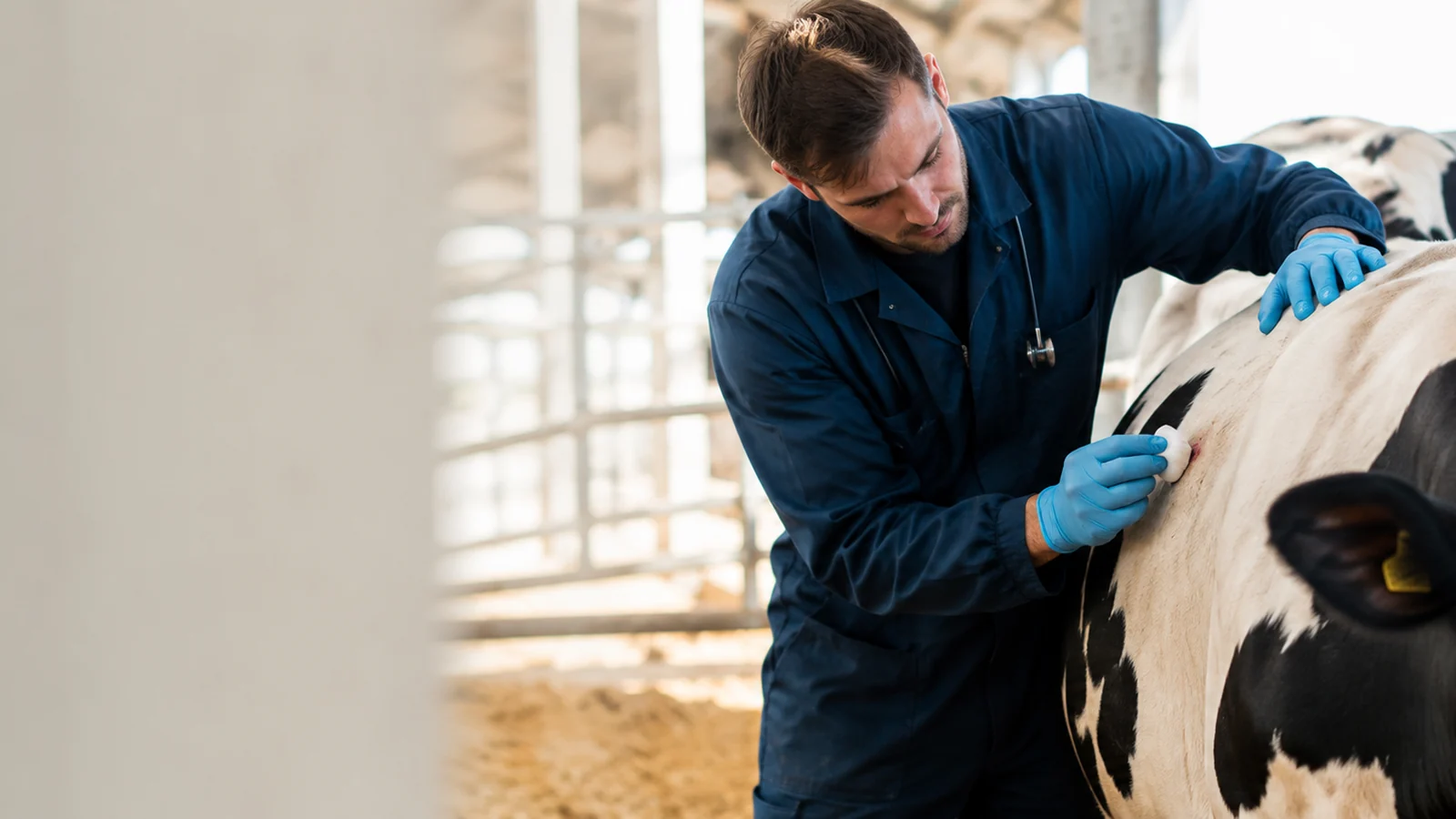
Skin wounds in livestock may be caused by contact with sharp objects, unsuitable equipment, fighting among animals, prolonged recumbency, burns, insect bites, or skin diseases.
The severity of a wound does not depend only on its outward size. Small but deep, contaminated wounds, or those near a joint, eye, udder, or hoof, may require prompt veterinary evaluation.
The most important causes of wounds
- Sharp edges of feed troughs, doors, and fences
- Wire, nails, and metal parts
- Goring or fighting between animals
- Slipping and falling
- Continuous pressure in recumbent (down) animals
- Improper injection
- Itching caused by external parasites
- Chemical or thermal burns
- Injury to the udder and teat
- Insect bites and infestation of the wound with fly larvae
Correcting the cause of the wound is very important, because if a sharp edge, unsuitable bedding, or the cause of itching remains, the injury will recur.
How should we assess a livestock wound?
In the initial assessment, the following should be evaluated:
- Location and depth of the wound
- Amount of bleeding
- Presence of mud, manure, or a foreign object
- Swelling, warmth, and pain
- Purulent discharge or unpleasant odor
- Presence of black, dead tissue
- The animal's ability to move
- Fever, lethargy, or reduced appetite
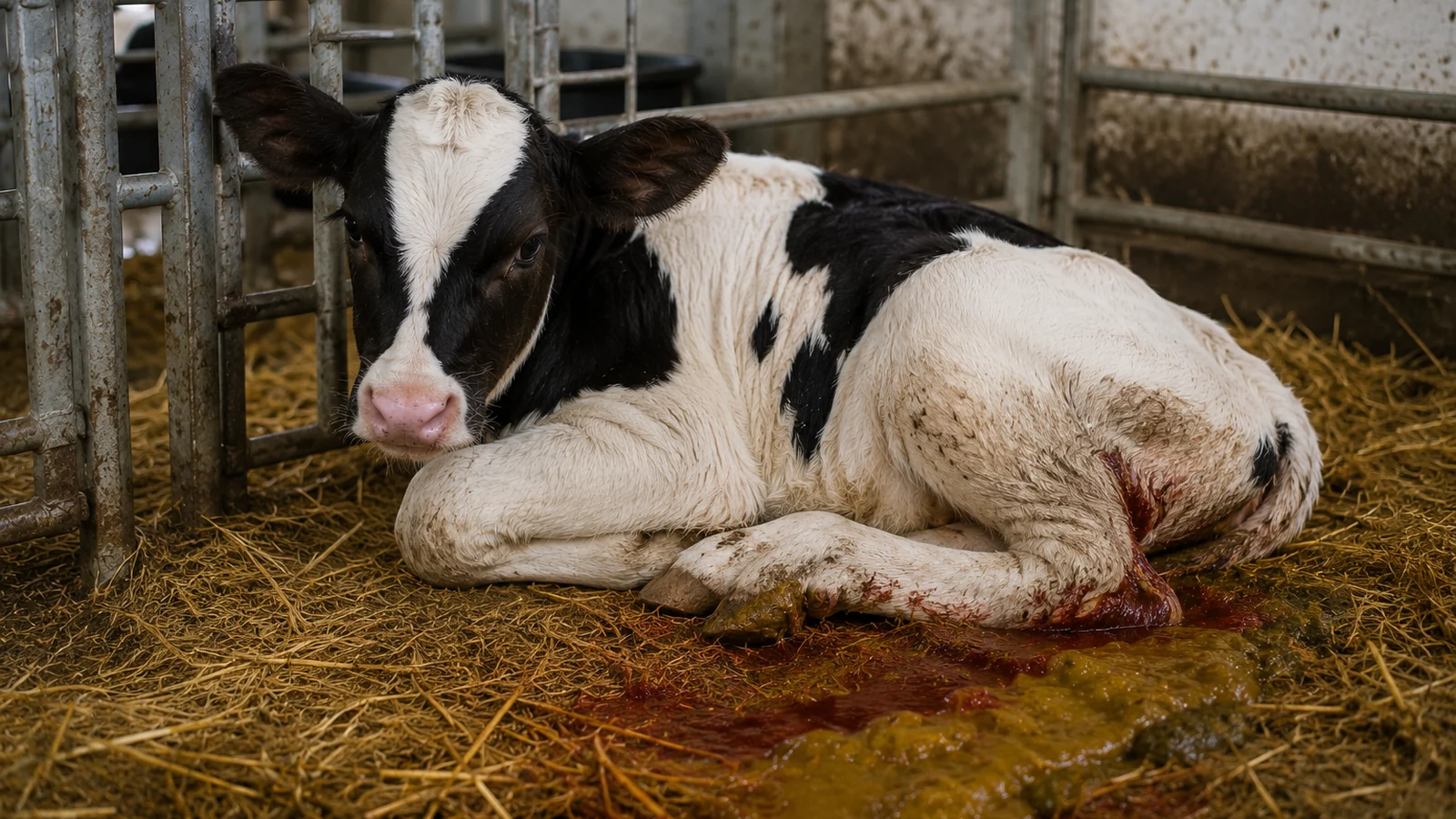
Puncture wounds may appear small on the surface, yet carry contamination into deeper layers and set the stage for abscess formation.
First aid for superficial wounds
- Keep the animal in a clean, dry place.
- If bleeding, apply direct pressure with gauze or a clean cloth.
- Clean around the wound without causing further injury.
- Remove surface contamination with wash saline or clean water.
- Prevent manure, soil, and insects from re-entering the wound.
- Check the wound daily for swelling, discharge, and change in odor.
Proper washing helps remove contamination and reduce the microbial load. The type of dressing, suturing, or removal of dead tissue should be determined by the veterinarian based on the location and condition of the wound.
What should be avoided?
- Using caustic and concentrated substances on the wound
- Pouring powder or contaminated compounds onto the injury site
- Closing a deep, contaminated wound without assessment
- Arbitrary use of antibiotics
- Pulling out deep tissue or a foreign object
- Leaving the injured animal on wet, contaminated bedding
Some wounds should not be closed immediately, because contamination and damaged tissue remaining under the skin can increase the likelihood of infection.
When should you contact a veterinarian?
- Bleeding does not stop with direct pressure.
- The wound is deep, extensive, or penetrating.
- A joint, tendon, eye, udder, or teat is involved.
- The animal has severe lameness or is unable to move.
- Purulent discharge, a foul odor, or dead tissue is seen.
- There is fever, lethargy, or reduced appetite.
- Insect larvae are observed in the wound.
- The wound does not heal after several days.
The presence of fly larvae in a wound requires prompt action, because some larvae can feed on living tissue and spread the injury.
Preventing skin wounds
- Remove sharp edges and metal parts from the housing.
- Correct slippery floors and wet bedding.
- Reduce crowding and fighting among animals.
- Keep recumbent animals on soft bedding and reposition them regularly.
- Implement a control program for ticks, lice, and mange.
- Train staff in the correct method of injection and animal handling.
- Check small wounds before contamination spreads.
Regular repositioning of a recumbent animal, soft bedding, a clean environment, and proper nutrition are important in preventing pressure wounds.
Frequently asked questions
Does every wound need an antibiotic?
No. The need for an antibiotic depends on the depth, contamination, and location of the wound and the presence of a general infection, and it should be determined by the veterinarian.
Can the wound be washed with water?
To remove surface contamination, clean water or wash saline can be used. Deep wounds or those near sensitive structures should be examined by the veterinarian.
Should a livestock wound always be dressed?
No. Whether dressing is possible depends on the location of the wound, the degree of contamination, and the animal's housing conditions.
What sign suggests the possibility of infection?
Increased swelling, warmth, pain, purulent discharge, unpleasant odor, fever, and reduced appetite can be signs of infection.
Summary
Managing a skin wound in livestock begins with stopping the bleeding, proper washing, preventing re-contamination, and assessing the depth of the injury. Deep, contaminated wounds, or those near sensitive structures, should not be treated without veterinary evaluation.
Related topics
- Common skin diseases in cattle
- Parasitic diseases in livestock
- Reduced appetite in cattle
- Scientific consultation form
Sources
- MSD Veterinary Manual. Wound Management.
- MSD Veterinary Manual. Initial Wound Management.
- University of Minnesota Extension. Basic Animal First Aid.
Note: This material is educational and is not a substitute for examination, suturing, surgery, or a veterinarian's prescription. Asadaru topical products are part of a supportive livestock care program and are not a substitute for specialized treatment of deep or infected injuries.
Phytogenics are not a substitute for good flock management; they are a complementary tool for it. The best results come when they are used alongside biosecurity, balanced nutrition and a vaccination program.
The global picture at a glance
The European Union has banned growth-promoting antibiotics since 2006, and the global market for phytogenic additives is on a steady growth path — with growing application across both poultry and livestock.
$1.05 → $1.48 billion
Global phytogenics market, 2024–2030
Grand View Research / MarketsandMarkets
Since 2006
EU ban on growth-promoting antibiotics
EU Regulation 1831/2003
Note: This piece is sample general educational content for information only; it is not a substitute for the advice of the flock’s supervising veterinarian. Asadaru supplements are supportive and preventive and are not a substitute for treatment or vaccination. The final article texts are provided and reviewed by the client.