The Role of Prebiotics in Livestock Gut Health
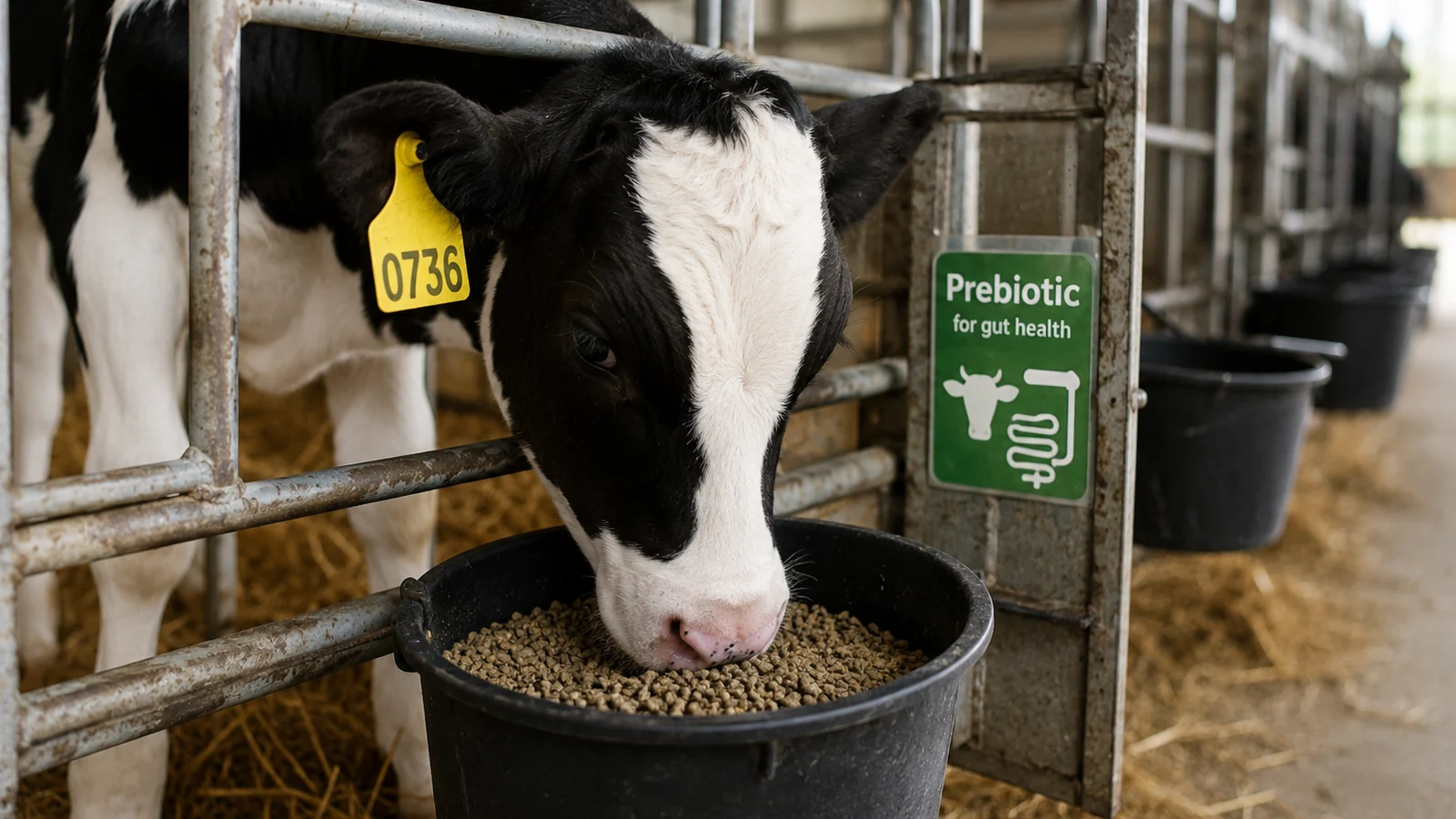
Prebiotics are compounds that are not directly digested by the animal, but that can be made available to certain gastrointestinal microorganisms and help modulate the intestinal microbial population. Mannan-oligosaccharides, fructo-oligosaccharides, and inulin are among the well-known examples of these compounds.
The microbial balance of the digestive tract plays a role in feed digestion, gut wall health, immune system function, and the animal's resistance to production-related stress. For this reason, prebiotics have attracted attention as part of a supportive nutrition program for livestock.
What is the difference between a prebiotic and a probiotic?
Prebiotics and probiotics are not the same:
- Prebiotic: a compound that can support the growth or activity of beneficial microorganisms.
- Probiotic: contains specific live microorganisms.
- Synbiotic: a combination of a prebiotic and a probiotic.
The choice of each should be made according to the animal's age, the type of ration, the rearing conditions, and the purpose of use.
How do prebiotics work?
Supporting microbial balance
Some prebiotics can make conditions more favorable for the activity of beneficial gastrointestinal bacteria and shift microbial competition in favor of the desirable populations.
Supporting the intestinal barrier
The intestinal wall is one of the body's lines of defense against pathogens and harmful compounds. Maintaining microbial balance can help the normal function of this barrier and reduce digestive irritation.
Aiding digestion and growth
In some studies, the use of prebiotics has been associated with improved growth, feed intake, or feed efficiency in calves; however, the results depend on the type of compound, the amount used, and the farm conditions, and are not identical across all herds.
When is the use of prebiotics considered?
Prebiotics may be used as part of a supportive program under the following conditions:
- The early period of a calf's life
- A change of ration or milk replacer
- The weaning period
- After a period of illness or treatment
- Periods of transport or relocation stress
- Reduced appetite or a decline in digestive performance
- Herds with a history of recurrent digestive problems
Using prebiotics in a healthy animal does not necessarily always produce a noticeable change in performance. The animal's response to these compounds depends on the initial state of the digestive tract and on rearing management.
The relationship between prebiotics and calf diarrhea
A disturbance in the intestinal microbial balance can be one of the contributing factors in calf digestive problems. Prebiotics may be used as part of a program to support gut health, but a prebiotic product is not considered a direct treatment for all types of diarrhea.
In a calf affected by diarrhea, assessing dehydration, replacing fluids and electrolytes, diagnosing the causative agent, and correcting hygienic and nutritional conditions still remain the priorities.
A prebiotic is not a substitute for proper management
The effect of a supplement is better assessed when the basic principles of management have been observed:
- Prompt and adequate colostrum intake
- Use of standard milk or milk replacer
- Washing of milking equipment
- Provision of clean water
- Gradual change of ration
- Isolation of sick animals
- Control of housing density and humidity
No prebiotic can, on its own, compensate for inadequate colostrum, contaminated feed, water shortage, or poor hygiene.
Frequently asked questions
Is a prebiotic the same as a probiotic?
No. A probiotic contains live microorganisms, whereas a prebiotic is a compound that supports the activity of certain gastrointestinal microorganisms.
Is a prebiotic suitable for all animals?
The choice of product, the amount, and the duration of use should be made according to age, ration, health status, and rearing purpose.
Does a prebiotic cure diarrhea?
A prebiotic can be part of a program to support gut health, but it is not a substitute for fluid therapy, diagnosis of the causative agent, or specific treatment.
When do the results of use become apparent?
The response depends on the type of product, the animal's condition, the ration composition, and the duration of use, and no single time or result can be set for all herds.
Conclusion
By supporting microbial balance and the normal function of the digestive tract, prebiotics can be part of a livestock nutrition program. Nevertheless, the outcome of their use depends on the quality of the product, the animal's condition, and adherence to nutrition and hygiene principles.
Related topics
- Digestive tract health in cattle
- Calf gut health
- Calf diarrhea; signs and control methods
- Factors affecting calf growth
- Scientific consultation form
References
- Uyeno Y, et al. Effect of Probiotics and Prebiotics on Cattle Health and Productivity.
- Lopes RB, et al. Effect of Prebiotics on Growth and Health of Dairy Calves.
- Welch CB, et al. Utilizing the Gastrointestinal Microbiota to Modulate Cattle Health.
- Markowiak P, Śliżewska K. The Role of Probiotics, Prebiotics and Synbiotics in Animal Nutrition.
Note: This material is educational and is not a substitute for ration formulation, examination, or the advice of a veterinarian and nutrition specialist. Nutritional supplements should be used as part of a comprehensive livestock management program.
Phytogenics are not a substitute for good flock management; they are a complementary tool for it. The best results come when they are used alongside biosecurity, balanced nutrition and a vaccination program.
The global picture at a glance
The European Union has banned growth-promoting antibiotics since 2006, and the global market for phytogenic additives is on a steady growth path — with growing application across both poultry and livestock.
$1.05 → $1.48 billion
Global phytogenics market, 2024–2030
Grand View Research / MarketsandMarkets
Since 2006
EU ban on growth-promoting antibiotics
EU Regulation 1831/2003
Note: This piece is sample general educational content for information only; it is not a substitute for the advice of the flock’s supervising veterinarian. Asadaru supplements are supportive and preventive and are not a substitute for treatment or vaccination. The final article texts are provided and reviewed by the client.