Reduced Feed Intake in Broilers: Causes and How to Investigate
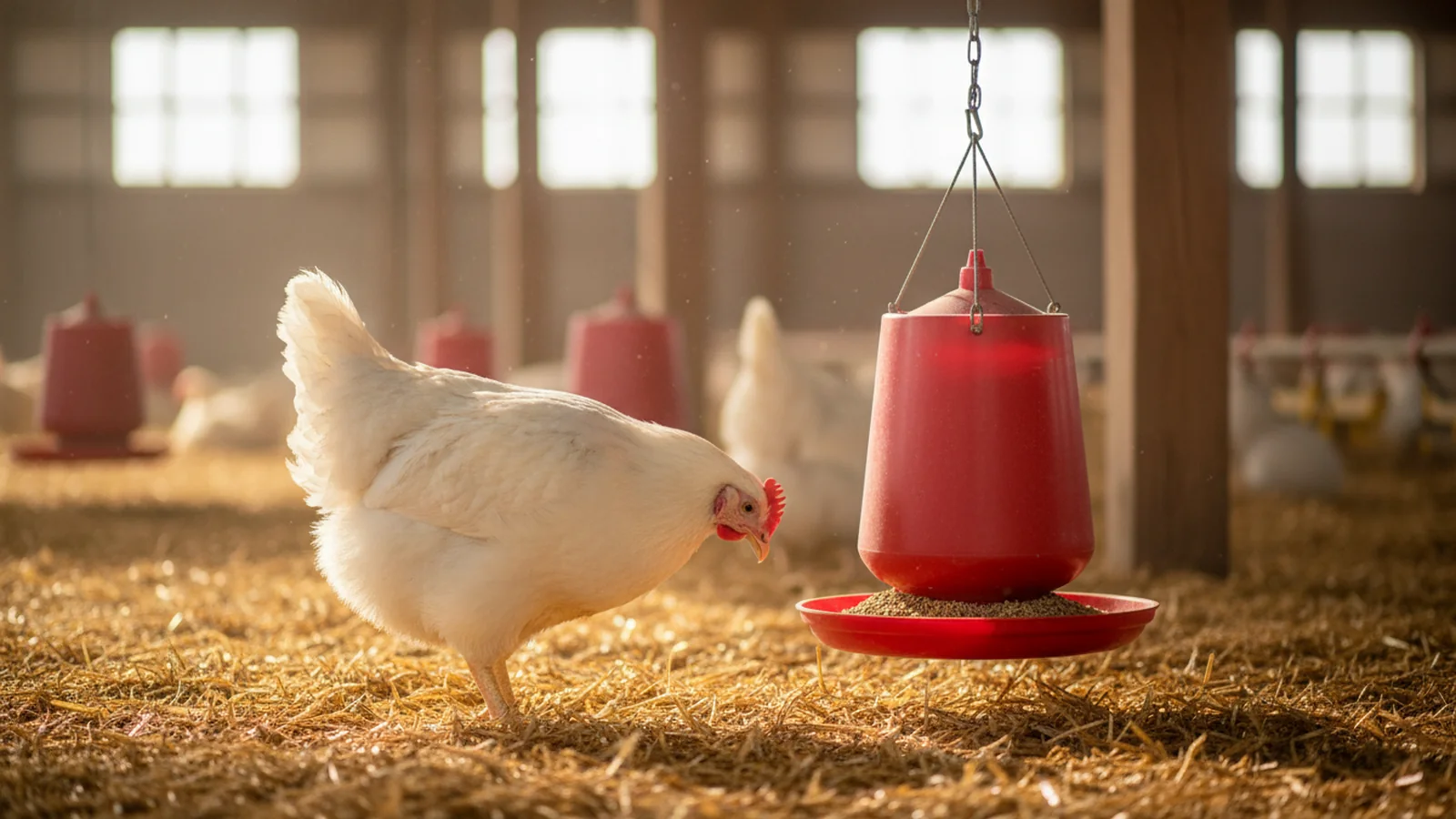
A drop in feed intake is one of the earliest signs of a problem in the flock. A bird that eats less due to heat, disease, poor water or feed quality, pain, stress, or equipment issues will very quickly show slower growth and reduced uniformity. Because many causes produce similar signs, focusing solely on "boosting appetite" without identifying the underlying factor can delay diagnosis.
A proper assessment should begin by comparing actual intake against age, weight, breed, temperature, and lighting program. Sometimes daily intake has fallen relative to the previous day yet the recorded amount is still within the expected range; conversely, an apparently small drop in a heavy flock during hot weather may be the start of a significant problem.
Accompanying signs that should be checked
- Fewer birds visiting the feeders, or abnormal crowding in a particular part of the house
- A drop in water intake or, conversely, a disproportionate rise in water relative to feed
- Lethargy, huddling, ruffled feathers, or abnormal breathing
- Changes in droppings, undigested feed, or increased litter moisture
- Reduced weight gain, greater weight spread, and rising mortality
- Presence of mold, off odor, discoloration, or unusual particle size in the feed
The most important causes of reduced feed intake
1. Temperature and environmental conditions
In hot conditions, the bird reduces feed intake to lower its metabolic heat production. Severe cold can also disrupt the intake pattern by changing behavior, causing crowding and limiting uniform access to feed. Ammonia, dust, improper air speed, and stocking density should also be checked.
2. Water quality and access
Any disruption in drinker flow rate, line pressure, water temperature, or the microbial quality of the water can change the flock's behavior before a clear drop in feed appears. Without adequate access to water, a bird will not eat normally.
3. Feed and equipment
A sudden change in formula, poor pellet quality, feed dust, fat oxidation, fungal contamination, or errors in feed distribution are common factors. Feeder height, how long lines sit empty, and crowding around the equipment should also be examined.
4. Disease and pain
Digestive, respiratory, and systemic diseases as well as locomotor problems can reduce intake. A drop in feed coinciding with rising mortality, rales, diarrhea, or post-mortem lesions requires immediate veterinary investigation.
5. Stress and management practices
Vaccination, transfer, changes in lighting, loud noise, high density, frequent handling of the flock, or several simultaneous actions can cause a short-term or more prolonged drop.
A step-by-step investigation method
- Record actual feed and water intake and compare with the previous three days
- Inspect all points of the house and check the distribution of the birds
- Check the performance of the water and feed lines at the start and end of the house
- Measure temperature, humidity, and air quality at bird height
- Examine the feed for odor, moisture, particle size, and uniformity
- Perform a post-mortem on several representative birds and record the lesions
- Match the timing of the intake drop with vaccination, a diet change, or a heat wave
The role of solutions to improve palatability
Flavoring agents or plant-based compounds may be considered as a supportive solution in situations where the sensory quality of the feed or a reduced willingness to eat plays a role. However, these products should not be used to mask spoiled feed, poor water, or disease. The choice of Florasil or any other solution should be made after investigating the cause and with a defined objective.
Frequently asked questions
Is reduced feed intake normal in hot weather?
To some extent yes, but a severe drop or one accompanied by mortality is not normal, and ventilation and water capacity should be checked.
Why is water intake normal but feed has decreased?
Heat, feed quality, mouth and digestive problems, or a diet change can produce such a pattern.
Does a flavoring agent always increase intake?
No. The outcome depends on the underlying cause, feed quality, formulation, and the condition of the flock.
When is the situation an emergency?
A rapid drop in intake together with mortality, severe respiratory signs, nervous symptoms, or cessation of water intake requires immediate action.
Suggested internal links
- Heat stress in poultry
- Drinking water quality in poultry farming
- Gut health in broilers
- Factors affecting FCR
- Florasil product page
Suggested references for scientific review
1. Aviagen. Broiler Management Handbook.
2. Cobb-Vantress. Broiler Management Guide.
3. Merck Veterinary Manual. Nutritional and management disorders of poultry.
Phytogenics are not a substitute for good flock management; they are a complementary tool for it. The best results come when they are used alongside biosecurity, balanced nutrition and a vaccination program.
The global picture at a glance
The European Union has banned growth-promoting antibiotics since 2006, and the global market for phytogenic additives is on a steady growth path — with growing application across both poultry and livestock.
$1.05 → $1.48 billion
Global phytogenics market, 2024–2030
Grand View Research / MarketsandMarkets
Since 2006
EU ban on growth-promoting antibiotics
EU Regulation 1831/2003
Note: This piece is sample general educational content for information only; it is not a substitute for the advice of the flock’s supervising veterinarian. Asadaru supplements are supportive and preventive and are not a substitute for treatment or vaccination. The final article texts are provided and reviewed by the client.